
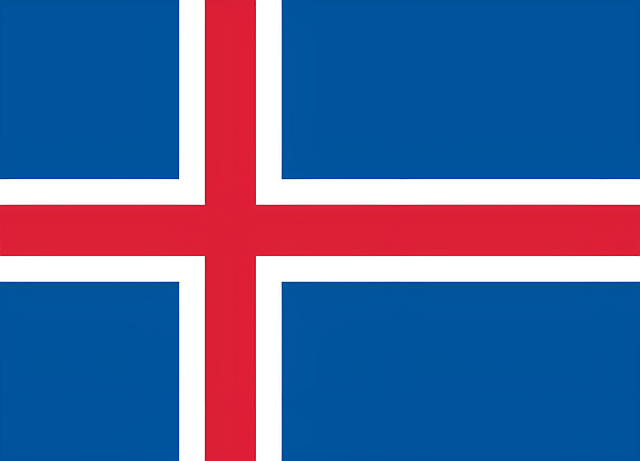
Iceland has said “NO.” Not to the European Union as an idea, nor to Europe as the space to which it belongs, but to continuing accession negotiations with the European Union. In the referendum, 52.8 percent of voters opposed continuing the accession talks, while 47.2 percent supported their continuation. The margin is not huge, but the political message is clear: at this moment, a majority of Icelanders do not want to reopen the question of EU membership. And that is precisely why this result deserves to be viewed far beyond the framework of Icelandic politics. Iceland today is not a country choosing between Europe and isolation. Iceland is choosing between two different ways of belonging to Europe. That may be the most important message of this referendum.
Iceland is already deeply integrated into the European space. It is a member of the European Economic Area, has access to the single European market, participates in the Schengen Area and is part of a wide range of European economic and political mechanisms. At the same time, it is not a member of the European Union and has no representatives in the institutions where rules are adopted that Iceland must, in various areas, accept and implement. And this is where the Icelandic paradox emerges: you can be outside the European Union and still be deeply inside Europe. You can have formal political autonomy while at the same time accepting a large part of the rules created elsewhere. That is why the Icelandic question has never simply been about whether Iceland should join the European Union. The real question is this: do we want to be part of a system in which decisions are made without us, or part of a system in which we can participate in making those decisions? That is a much more serious question than the familiar division between Eurosceptics and Euroenthusiasts.
For Iceland, the word “sovereignty” means much more than a political concept. It has a very concrete meaning. Fisheries are one of the foundations of the Icelandic economy, but they are also part of the country’s national identity. Few countries have such a strong historical experience of fighting for control over their own maritime resources. The “Cod Wars”, Iceland’s conflicts with the United Kingdom over fishing zones, left a deep mark on Icelandic political consciousness. Through those conflicts, Iceland built not only its fishing zones but also the idea that a small state can protect its own interests if it insists on them firmly enough. That is why the issue of fisheries in the EU debate is about much more than economics. Opponents of EU membership have a simple argument: if Iceland spent decades building its independence on control over its natural resources, why should it now transfer part of that control to Brussels? Supporters of membership respond just as simply: sovereignty in the modern world is not only the right to make decisions on your own. Sovereignty is also the ability to participate in making decisions that will inevitably affect you.
This is where two different understandings of sovereignty collide. One says that it is better to have less influence but retain the final right to decide. The other says that it is better to share part of your formal autonomy with others if, in return, you gain genuine influence over decisions taken collectively. Icelanders have narrowly chosen the first option. Their choice is neither irrational nor anti-European. It stems from the specific historical experience of a small state that has learned that sovereignty is not an abstract word, but something that can be tied to very concrete things: the sea, fish, money, borders and the right to decide at home about one’s own resources.
This is not the first time Iceland has faced such a dilemma. When the country seriously considered EU membership at the beginning of the previous decade, the circumstances were very different. The financial crisis of 2008 hit Iceland dramatically. Its banking system collapsed, and the country found itself in one of the most serious economic crises in its modern history. At the time, the European Union represented to many what a small and vulnerable economy needed — stability, access to a larger market and an institutional framework. But politics changes with circumstances. What looks like security in a time of crisis can appear as a constraint several years later. And this is one of the important lessons of the Icelandic experience: European integration is never merely an economic question. It is always also a question of political timing, perceptions of security, national experience and an assessment of one’s own interests.
For Iceland, the word “sovereignty” means much more than a political concept. It has a very concrete meaning.
It is particularly important to reject one misleading interpretation. Iceland’s “NO” is not a vote against Europe. Iceland is a member of NATO. Its security is already tied to the broader Euro-Atlantic space. At the same time, Iceland is deeply economically connected to the European market. EU membership, therefore, is not a question of survival for Iceland. It is a question of political weight. How much does Iceland want to influence European decisions? How much of its national sovereignty is it prepared to share with other states in order to have a seat at the table where those decisions are made? This is where a much broader European dilemma lies, because Europe is increasingly becoming a space in which no small state, not even a wealthy one, can completely avoid the influence of major economic, security and geopolitical processes. The question is simply whether you respond to those processes alone or together with others.
A View from Bosnia and Herzegovina
This is precisely where the Icelandic story becomes interesting for Bosnia and Herzegovina. Of course, Bosnia and Herzegovina and Iceland are not comparable countries. Their histories, institutions, economies, geopolitical positions and internal political structures are dramatically different. But one question is the same: what does it actually mean to be part of Europe? For Bosnia and Herzegovina, the answer is today largely presented through the goal of membership in the European Union. And that is indeed a strategic objective. But European integration should not be reduced merely to the technical fulfilment of conditions, the opening and closing of negotiating chapters, and endless waiting for the next meeting in Brussels. Behind all these procedures lies a much more important question: will we one day simply be consumers of European decisions, or do we want to be participants in making them? Iceland today faces the opposite problem. It has access to the European market and is subject to a significant part of European rules, but it does not have the full institutional ability to participate in creating those rules. Bosnia and Herzegovina, on the other hand, is still outside that system and is trying to enter it. That is why Iceland’s experience should be observed carefully, but not treated as a model to be copied. Its value lies in the question it poses to us. For a long time, European politics focused on which civilisation, political space or geopolitical community we belong to. But the world has changed. Today, it is no longer enough to ask where you belong. You have to ask how much influence you can have over the place to which you belong. That is the essence of the Icelandic referendum. Icelanders have chosen, for now, to preserve greater formal autonomy, even at the cost of having less institutional influence over European decisions. Their choice should be respected precisely because it is democratic. But it should not be romanticised. Being outside the European Union does not automatically mean being more sovereign in every practical sense, just as EU membership does not automatically mean losing sovereignty. The real question is far more complicated: which decisions can you make on your own, which must you make together with others, and, perhaps most importantly, which decisions can you actually influence? That is why Iceland’s “NO” is not a story about Iceland saying “NO” to Europe. It is a story about Iceland saying “YES” to a different understanding of its place in Europe. Iceland has chosen to remain deeply connected to the European space while staying outside the political structure of the European Union. That is its choice and its responsibility. Bosnia and Herzegovina has a different historical and political path. We want a seat at the European table. But precisely for that reason, we must start thinking more seriously about what we will do once we get there. It is not enough simply to sit at the table. You have to know what you want, what you can offer, what you can protect and how capable you are of influencing decisions.
Perhaps that is the most important lesson of the Icelandic referendum: in contemporary Europe, the question is no longer simply where you belong, but how much influence you can have over the place to which you belong. And for Bosnia and Herzegovina, that means that European integration cannot be merely a story about how to become part of the European Union. It must also be a story about what kind of country we will bring into that Union. Because when we finally sit down at the European table, it will not be enough to say that we have arrived. We will have to know what we are there to ask for.

Saša Čekrlija, full professor in Bosnia and Herzegovina and Montenegro, guest professor in PR China, holding a PhD in human sustainable development. He served as an advisor to H.E. Igor Crnadak, Minister of Foreign Affairs (mandate 2015–2019).


Be First to Comment